Best breathing apps in 2026: 8 compared
Seven of these eight apps pace your breathing with a timer, a voice or an animation. Lungy is different: it turns your breath into beautiful, real-time biofeedback, so you can see yourself slow down. We make it, and it is our pick.
The short answer
Lungy is the only app here that gives you biofeedback. Every breath you take moves the scene on screen, so you can see yourself slowing down and practise holding a calmer rhythm.
- On Android: Prana Breath.
- For a teacher's voice: Othership or Breathwrk.
- For sleep stories or meditation: Calm or Headspace.
- For a bare pacer with no subscription: iBreathe.
Why Lungy
Beautiful biofeedback. As you breathe out, dandelion seeds blow away, rain falls and particles drift. Your breath drives 20 scenes, each generated live with its own sound, so you practise with your eyes open and your attention on something beautiful rather than a countdown. The technology is patented.
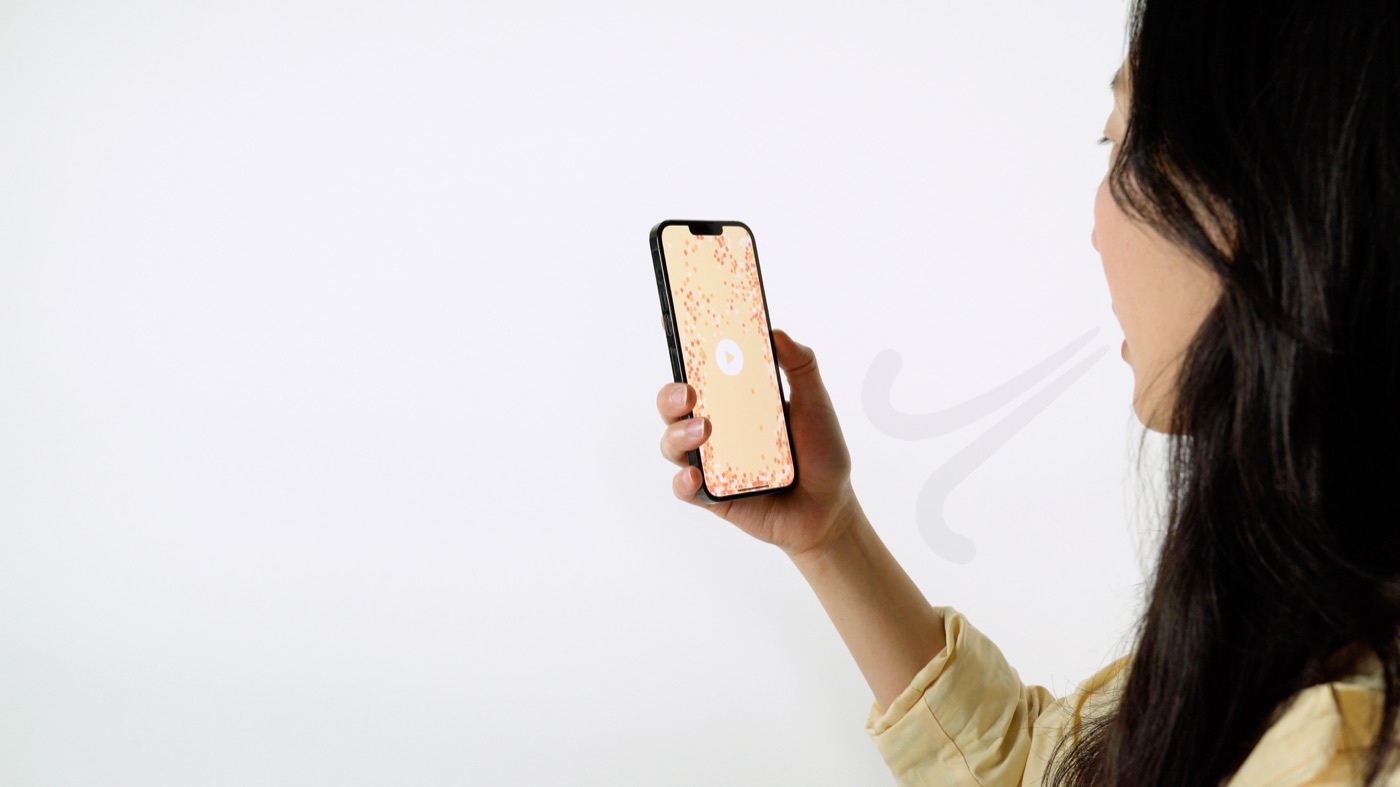
It helps you practise slow breathing. Slow, steady breathing can help calm the body's stress response, and trials link breathwork to modestly lower stress. Seeing every breath helps you find that rhythm and hold it, and with regular practice it becomes something you can do on your own when stress hits. Exercises include box breathing, 4-7-8 and coherent breathing, plus bedtime breathing to wind down before sleep.
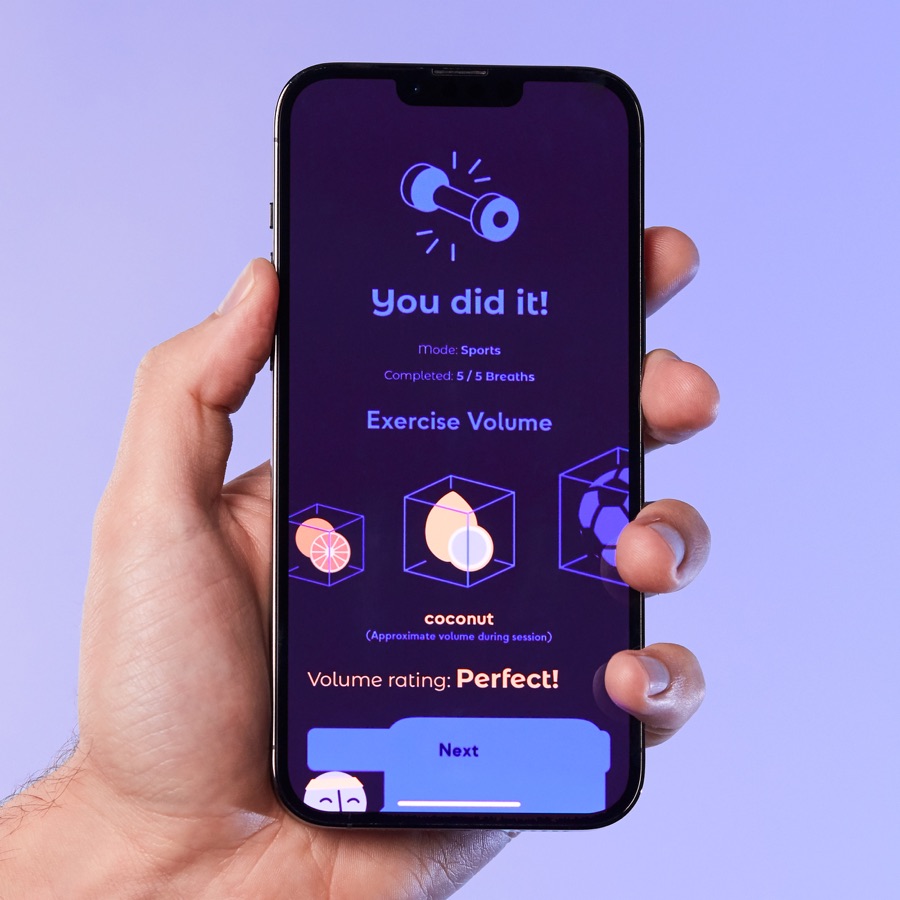
It is private. Lungy needs no account and no internet connection. It does not record or share your audio (unless you opt in to a research study), and your breathing data stays on your phone.
It has a track record. Lungy has been Apple's App of the Day in more than 50 countries, has over 150,000 downloads and is rated 4.8 on the App Store.
Where it falls short. It is iPhone only, it has no voice-led classes, and because it uses the microphone to follow your breath it works best somewhere quiet. One exercise a day is free; the rest needs Lungy Deluxe, from $3.99 a month.
Download Lungy on the App Store
Side by side
| App | What it is | Biofeedback? | Platforms | Cost |
|---|---|---|---|---|
| Lungy Our pick | Breathing exercises with visuals that react to you | Yes, live from your breath | iPhone; Apple Vision Pro (as Lungy: Spaces) | Free daily exercise; Deluxe from $3.99/month |
| Breathwrk | Breathing exercises and instructor-led classes | No | iPhone, Mac, Apple Vision Pro, Android | Free to start; Pro subscription. Free for Peloton members |
| Othership | Guided breathwork classes set to music | No | iPhone, iPad, Apple Vision Pro, Android | $17.99/month or $129.99/year |
| Calm | Sleep and meditation app with breathing exercises | No | iPhone, iPad, Mac, Apple Watch, Apple TV, Android, Wear OS | Some content free; Calm Premium subscription |
| Headspace | Meditation and mental health app with breathing exercises | No | iPhone, iPad, Mac, Apple Watch, Android | $12.99/month or $69.99/year |
| iBreathe | Simple breathing pacer | No (shows heart rate from an Apple Watch) | iPhone, iPad, Mac, Apple Watch, Apple TV | Free with ads; one-off purchases of $2.99 and $3.99 |
| Prana Breath | Breathing and meditation timer with no narrator | No | Android | Core features free, no ads; optional paid extras |
| Wim Hof Method | Breathing, cold exposure and mindset course | No (shows heart rate from a Wear OS watch) | iPhone, iPad, Mac, Apple Watch, Android, Wear OS | Free to start; from $5.99/month or $42.99/year |
"Biofeedback" is based on what each app's store listing says. Prices are US App Store prices on 24 November 2026.
The other seven
Breathwrk Best for a big library with voice coaching
Hundreds of exercises and instructor-led classes, which you can follow by sight, by voice or by vibrations timed to the pattern. It is now part of Peloton and free for Peloton members. On 24 November 2026 it was rated 2.2 on Google Play and 4.8 on the App Store, so try the Android version before you subscribe. App Store
Othership Best for classes led by a teacher
Closer to a class studio than a pacer: facilitators talk you through sessions set to music, from one minute to an hour. It is the most expensive app here, and its listing does not say what you can use without paying. App Store
Calm and Headspace Best for sleep and meditation
Both are meditation apps with breathing on the side. Calm is known for Sleep Stories; Headspace teaches meditation step by step. Both run on almost every device, including Apple Watch. If breathing exercises are all you want, you are paying for a lot you will not use. Calm · Headspace
iBreathe Best for a bare pacer with no subscription
A clean visual timer for Apple devices, with presets such as box breathing and 4-7-8 and patterns you can build yourself. It is free with ads, and the upgrades are one-off purchases. There are no classes and no Android version. App Store
Prana Breath Best for Android
More than 80 practices and a precise pattern editor, guided by animation and sound with no narrator. The core features are free, with no ads and no account. We could not find it on the App Store, and its depth can be a lot for a beginner. Google Play
Wim Hof Method Best for Wim Hof breathing and cold exposure
The official app for one method: rounds of fast, deep breathing and breath holds, combined with cold showers. It is a different practice from the slow breathing in the rest of this list and is not a wind-down tool. Do not practise it in water or while driving, and check with a doctor first if you have a heart or lung condition or are pregnant. App Store
Do breathing apps work?
Breathing exercises do, modestly. A 2023 meta-analysis in Scientific Reports pooled 12 randomised trials with 785 adults and found breathwork was associated with lower stress than control conditions, with similar effects for anxiety and low mood. Those trials tested breathing practice, not apps, and none compared one app with another.
Breathing exercises are self-care, not treatment. If anxiety, low mood or breathlessness is persistent, speak to a doctor. See our medical disclaimer, or try our free guided exercises in the browser first.
Common questions
What is the best breathing app?
Our pick is Lungy, because it is the only one of the eight apps compared here that gives you real-time biofeedback: your breath moves the visuals on screen as you breathe. It is iPhone only. On Android, the best choice is Prana Breath.
Is there a breathing app with biofeedback?
Yes. Lungy follows each exhale through the iPhone's microphone and turns it into movement on screen, so you see your breathing as you do it. None of the other seven apps here offers breath biofeedback. iBreathe and Wim Hof Method can show heart rate from a smartwatch, which is a different thing.
Are there any free breathing apps?
On Android, Prana Breath: its core features are free, with no ads and no account. On iPhone, Lungy gives you one exercise a day free and iBreathe is free with ads. Lungy also has free guided exercises that run in the browser at lungy.app/breathe.
Which breathing app is best for anxiety?
No trial has compared breathing apps for anxiety, so no app can claim to be proven best. Slow, steady breathing is the part with evidence behind it. Choose the app you find easiest to stay with: one that responds to your breath, such as Lungy, or one with a voice leading you, such as Othership or Breathwrk. Breathing exercises are self-care, not treatment, so see a doctor if anxiety is persistent or affecting daily life. More in can a breathing app help with anxiety?
Is there a box breathing app?
Yes. Lungy includes box breathing, with a scene that moves as you exhale, and iBreathe has it as a preset. You can also try box breathing free in the browser.
Sources
Checked on 24 November 2026. Spotted something wrong? Tell us and we will fix it.
- Lungy: App Store listing, privacy policy
- Breathwrk: App Store listing, Google Play listing
- Othership: App Store listing, othership.us
- Calm: App Store listing
- Headspace: App Store listing
- iBreathe: App Store listing, jadelizardsoftware.com
- Prana Breath: Google Play listing
- Wim Hof Method: App Store listing, Google Play listing
- Fincham GW et al. Effect of breathwork on stress and mental health: a meta-analysis of randomised-controlled trials. Scientific Reports 13, 432 (2023). nature.com

